
Vez in the Middle Ages
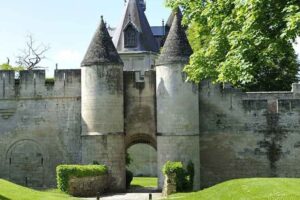
In the 13th century, king Philippe-Auguste inherited Vez. This inheritance was important because it meant Vez became a royal property, a land that belongs to the Crown. As early as 1214, king Philippe-Auguste actually gave this land to one of his knights, a man named Raoul Duchemin. Duchemin was given Vez after distinguishing himself at the famous battle called the battle of Bouvines, fought against the Ottoman Empire, and during which he personally ensured the king’s safety. As the new owner of Vez, this new lord - who had changed his name to Raoul d’Estrées - had the castle restored and fortified. He built a three-storey dwelling, and most importantly he raised ramparts on the hillside, and the high walls on the side of the village, which we can still see today.
Barely 150 years later, in 1360, it was his great-grandson, Jehan de Vez, who built the hexagonal dungeon. As said earlier, 1360 was in the midst of the Hundred Years War, which was fought against the English and their allies, the Burgundians. Helped by a frightened population, Jehan de Vez also completed the construction of the ramparts facing the village. A little later, in 1386, Vez fell back into royal hands through inheritance: Louis d’Orléans, the brother of king Charles VI, became the new owner. He completed the fortifications of Vez, as at the time the Valois was still being regularly ravaged, and the castle of Vez sacked.
Find out more
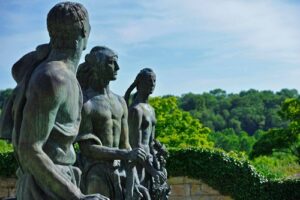
These three monumental bronze works by Antoine Bourdelle are allegories, recognizable by their attributes: Force carries a club, Eloquence is represented with a parchment and an open mouth, and Liberty holds a vine. They were designed for the equestrian statue of General Alvear in Buenos Aires. These sculptures are especially marked by the influence of archaic Greek art, and certain works by Michelangelo. Created during World War I, Force and Victory, which you will see in the chapel, became symbols of the war against Germany.
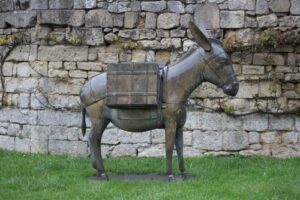
Artiste de renommée mondiale, Lalanne est d’abord connu pour son univers de formes stylisées empruntant aux règnes animal et végétal : il créé des sculptures d’animaux qu’il présente dans une conception non seulement décorative, mais aussi utilitaire de la sculpture. Il puise en effet dans la nature pour créer des armoires, sièges, miroirs et lits, et établit ainsi un lien entre la sculpture et le mobilier.